
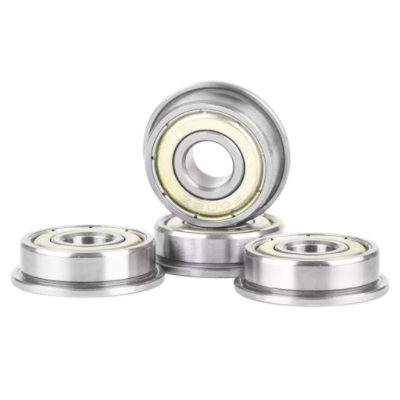
Flanged Ball Bearings
Flanged ball bearings feature a soild steel flange on their outer ring, making it simpler to position them within a housing. The flange further aids in preventing axial movement of the bearing if it expeiences a thrust load. Maintaining the position of a flanged bearing in a fixed or mounted assembly is more straightforward. The flange adds extra stability and rigidity to the bearing system, guaranteeing its ability to endure smooth rotation.
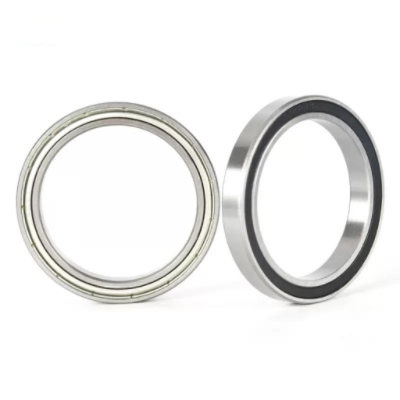
Thin Section Bearings
Thin section ball bearings are similar to standard ball bearings but with a thinner cross-section. These thin section ball bearings are suitable for applications with limited space and for handling both axial and radial loads.Thin thin section bearings are made from chrome steel or stainless steel. They come in a series, the 6800 series, the 6800 series and the 6900 series. Some sizes of these bearings can be produced open, shielded or sealed.
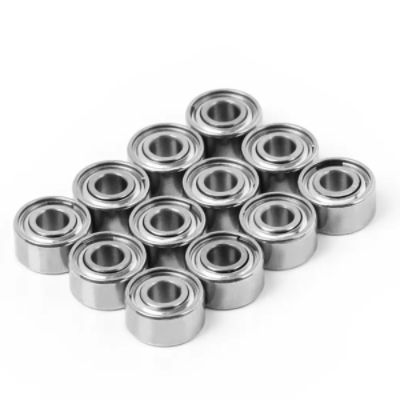
Miniature Ball Bearings
Miniature bearings refer to ball bearing with small sizes. There are metric standard miniature bearings and inch size miniature bearings. Metric size miniature bearings are single row ball bearings from 1mm to 9mm bore size. Miniature bearing handle axial and radial loads effectively, to reduce friction, noise, and vibration. Miniature bearings are essential across many industries, supporting precision and reliability in motors, robotics..
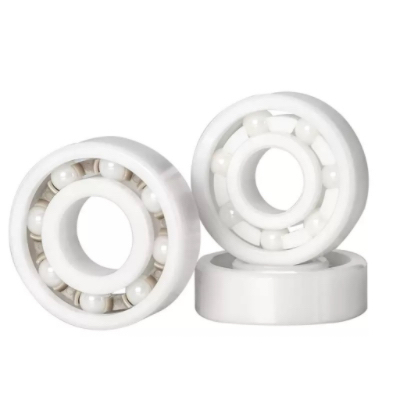
Ceramic Ball Bearings
Ceramic ball bearings are specialized bearings that feature ceramic balls encased by either ceramic or steel rings. The balls within the assembly of a ceramic ball bearings are made from ceramic materials such as silicon nitride or zirconia. Ceramic ball bearings excel in high speed, high temperature and corrosive environments. Ceramic ball bearings are used in a wide range like refrigerators, vacuum cleaners and cars, due to their durability and efficiency.
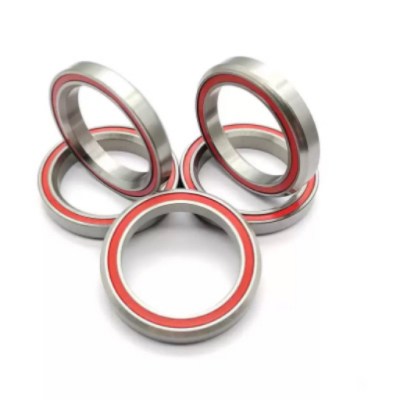
Bicycle Headset Bearings
Bicycle headset bearings are component of bicylcle headsets, which is the set of parts on a bicycle that provides a rotatable interface between the bicycle fork and the head tube of the bicycle frame itself. Bicycle headset bearings are usually ball bearings. They provide a low friction contact between the bearing cup and the steerer. Bicycle headset bearings come in two angular contact configurations: 45°/45° (most common for road and mountain bikes) or 36°/45°.
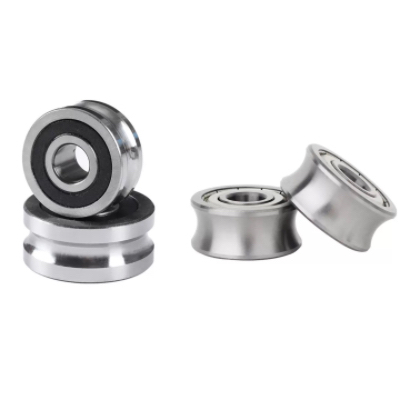
Guide Wheel Bearings
There are V- groove guide wheel bearing, U-groove bearing, W-groove guide bearing, G-groove guide bearing, SG groove bearing. U groove bearings provide stable alignment, smooth motion, and durability for cable and track-guided applications. V groove bearings provide smooth motion, precise alignment, and high durability for track-based applications. These series grooved bearings are widely used in linear guide and cylindrical guides.