
How to Choose Flanged Bearings to Your Application
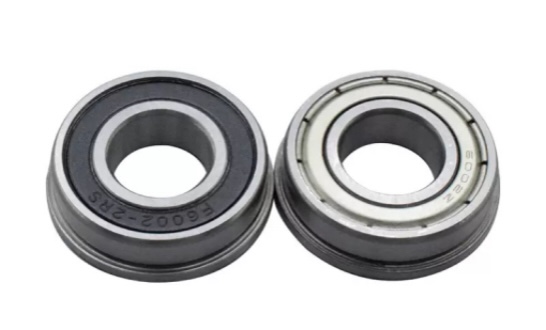
Table of Contents
Flanged bearings are essential in industrial machinery. They ensure proper alignment, prevent movement, and provide stability forshafts. This reduces vibration and improves performance. It also contributes to extending the lifespan of the equipment.
Flanged bearings play a key role in machinery by reducing wear on components. They also boost overall efficiency and extend the lifespan of rotating equipment. Their design ensures smooth operation and long-term reliability. This makes them essential for industrial applications.
Understand the Basics of Flanged Bearings
What Are Flanged Bearings?
Flanged bearings are bearings with an extended rim, or flange, at one end.This flange simplifies mounting and ensures proper positioning within a housing or tube.It helps maintain stability and alignment during operation.
Flanged bearings are used in machines where precision and stability are important.The flange keeps the bearing in place and helps align the shaft properly.This makes them perfect for equipment like conveyors, robots, and car parts, ensuring smooth and reliable operation.
Main Types of Flanged Bearings
Flanged Open Bearings
Open ball bearings have a simple design with an inner race, an outer race, and ball elements.These components work together to allow smooth rolling.They are “open” because they lack seals or shields, which makes them easy to maintain and clean.
Open ball bearings are used in machines with low to moderate speeds.They work well in clean environments where lubrication is easy to apply.They are commonly found in household appliances, electric motors, and bicycles.These applications require simple maintenance and low cost.
Flanged Shielded Bearings
Shielded ball bearings have a metal shield on one or both sides of the bearing.The shield acts as a barrier, preventing harmful particles from entering and damaging the internal components.
Shielded ball bearings are used in places where cleanliness matters, but rubber seals aren’t needed.They are commonly found in electric motors, fans, and industrial machinery.Keeping dirt and debris out is important for ensuring smooth and reliable performance.
Flanged Sealed Bearings
Sealed ball bearings have rubber or metal seals on both sides to fully protect the bearing from dirt, dust, and moisture.These seals keep contaminants out while also keeping the lubrication inside, ensuring smooth operation.This design makes sealed bearings ideal for harsh environments where cleanliness is crucial and long-lasting lubrication is needed.They’re commonly used in machinery, automotive parts, and equipment exposed to challenging conditions.
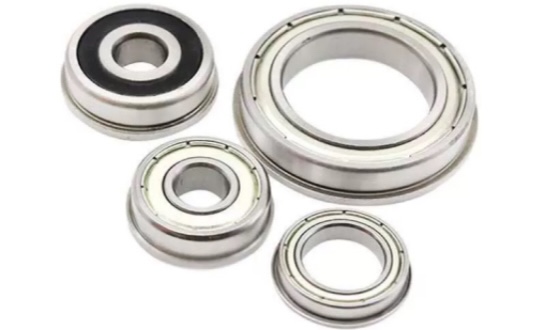
Choose a flanged ball bearing
Choose a flanged ball bearing that matches your load, speed, and environment to ensure long equipment life and reliable performance.
Measure your shaft, housing, and flange carefully to get the right size and fit, preventing misalignment and early failure.
Select bearing materials and seals based on your environment; stainless steel and sealed bearings work best in wet or harsh conditions.
Follow a step-by-step selection process, including load and speed assessment, fit checks, and consulting manufacturer data to avoid costly mistakes.
Buy from trusted suppliers who offer quality products, warranties, and technical support to get the best value and expert help when needed.
Applications of Flanged Bearings
Industrial and Automotive Uses
Mining equipment, industrial presses, and construction machines. Robotic arms, conveyor systems, and automated assembly machines.
Food Processing and Sanitary Applications
Ensuring Hygiene and Safety
Food-grade bearings are designed with materials and lubricants that comply with food safety standards, preventing contamination. Commonly used in conveyors, mixers, packaging machines, and other equipment in food processing plants.
Aerospace and Precision Machinery
Unmatched Accuracy
Precision flanged bearings ensure exact alignment and smooth motion.This is critical for applications requiring high tolerances, such as aerospace navigation systems and medical devices.
High Reliability
These bearings are built to perform in extreme conditions. They offer long-lasting durability and consistent performance, even in high-stress environments like aircraft engines or turbines.
Performance at High Speeds
Precision bearings can handle high rotational speeds with minimal friction, improving efficiency and reducing energy loss in critical machinery.
Applications
They are widely used in aerospace systems, robotics, optical equipment, and high-speed CNC machines. In these applications, precision and reliability are non-negotiable.
Identify Your Bearing Needs
Right Bearing for Your Application
You want to find the right bearing for your application. Start by reviewing your requirements. Each step helps you match the bearing to your needs and avoid costly mistakes. Use this step-by-step approach:
Define your application’s load, speed, and environment.
Select the correct fit for your flange. Interference fits work best for high-load, high-speed uses. Transition fits suit moderate loads and allow easier assembly. Clearance fits help in low-load or low-speed situations or when you expect thermal expansion.
Choose a bearing type that matches your load and speed. Roller bearings handle heavy radial loads. Tapered roller bearings work for combined loads. Thrust bearings support high axial loads. Rod end bearings help with angular misalignment.
Reference real-world examples from industries like automotive, aerospace, and machinery. These benchmarks help you see which bearing types succeed in similar ideal applications.
Follow best practices for mounting and installation. Keep the area clean. Check fit and tolerances. Use the right tools to prevent damage.
Consider lubrication needs. High-speed ideal applications need more attention to lubrication for heat control and long life.
Review technical specifications from the manufacturer. Check load capacity, speed rating, and dimensions before you choose a bearing.
A bearing selection guide can help you compare options and make the best choice for your flange bearing.
Key Considerations When Selecting Flanged Bearings
Material Type: Choose a material that suits the operating environment. Common materials include stainless steel for corrosion resistance, ceramics for high-speed applications, and carbon steel for general use. Food-grade materials may be necessary for food processing.
Size: Ensure the bearing size matches the space available in your application. Consider both the inner and outer dimensions to ensure proper fit and alignment.
Temperature Range: Check the temperature tolerance of the bearing material. If your application involves high or low temperatures, ensure the bearing is capable of withstanding these conditions. This will prevent degradation or failure.
Sealing Options: Select the appropriate sealing option (open, shielded, or sealed) based on the level of protection needed against contaminants. Sealed bearings are ideal for environments with dirt or moisture. Open bearings may be suitable for cleaner, dry applications.
Factors Affecting Bearing Performance
Shaft Alignment: Proper alignment ensures smooth movement. If the shaft is misaligned, it can cause uneven wear, more friction, and possible bearing failure. Keeping it aligned helps the bearing last longer.
Speed: High speeds can create heat and friction, which can wear out the bearing faster. Make sure the bearing is designed for the speed it will be operating at to prevent damage.
Lubrication: Lubrication reduces friction, helping the bearing run smoothly and last longer. Too little or the wrong type of lubricant can cause problems, so use the right amount for the application.
Common Measurement Mistakes and How to Avoid Them
Measuring only the shaft or only the housing. Always measure both.
Ignoring thermal expansion. Allow for changes in size due to temperature.
Overlooking the bolt hole spacing on the flange. Double-check all mounting points.
Using worn or inaccurate tools. Calibrate your calipers and measuring devices.
If you follow these steps, you will find the right bearing for your application and avoid common pitfalls. The right process ensures your flanged ball bearing delivers reliable performance in all ideal applications.
Conclusion
Selecting the right flanged bearing is essential for ensuring smooth operation and long-lasting performance.
Do you require assistance in selecting the appropriate flanged bearing? Contact XTO Bearing for detailed specs and expert advice. Our team is here to help you find the best solution for your needs.