
What Is a Linear Bearing?
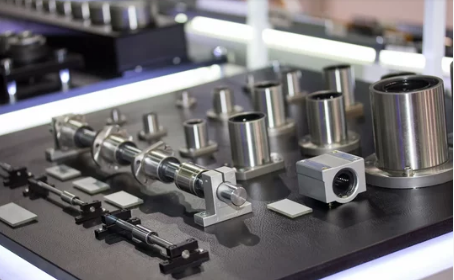
Table of Contents
What is a linear bearing?
A linear bearing is a mechanical component that enables low-friction motion along a single straight axis, guiding a carriage or load along a rail or shaft with precision and repeatability. Linear bearings are essential components in many machines and mechanical systems. They play a critical role in achieving smooth and precise linear motion. These bearings are designed to convert rotary motion into linear movement, improving efficiency and accuracy in various applications. In this guide, we’ll explain what a linear bearing is, how it works, and its key types and uses.
Understanding Linear Bearings
What is a linear bearing, exactly? At its core, it’s a mechanical component that allows free motion along a single straight axis — unlike traditional roller bearings, which support rotary movement.
Linear bearings move along a guide rail or shaft, ensuring smooth, controlled movement in a straight line.
By reducing friction between moving parts, they enable precise and reliable motion, making them ideal for high-precision equipment. Depending on the type, linear bearings can handle both heavy loads and high speeds.
What Is the Purpose of a Linear Bearing?
The purpose of a linear bearing is to reduce friction while constraining movement to a straight line, allowing machines to achieve precise, repeatable positioning under load.
Without linear bearings, moving components would rely on direct metal-to-metal sliding contact — generating excessive friction, heat, and rapid wear.
Linear bearings solve this by interposing rolling elements (balls or rollers) or low-friction materials between the moving carriage and the fixed rail, enabling consistent motion over millions of cycles.
In practical terms, this is what allows a CNC machine axis to return to the same position within microns, a 3D printer bed to move without wobble, and a medical imaging table to slide smoothly under precise electronic control.
Components of Linear Bearings
In a linear bearing system, multiple components come together to achieve smooth, precise motion.The exact parts may differ based on the bearing type and its application, but some common components include:
Linear Rails or Guides: These provide the track for the bearing to move along, ensuring smooth and controlled linear motion.
Carriages: Carriages hold the bearings and move along the rails. They distribute the load and connect the bearing to the moving object.
Drive Mechanisms: Belts, screws, or lead screws convert rotary motion into linear movement, driving the system efficiently.
Linear Motors: Directly generate linear motion without traditional mechanisms, offering efficient force for certain applications.
Support Structures: Frames and brackets stabilize the entire system, keeping it aligned and supporting the load.
End Supports: These maintain the rail alignment and prevent lateral movement, adding stability to the system.
Encoders and Sensors: Provide feedback on position and speed, essential for precision control and accuracy.
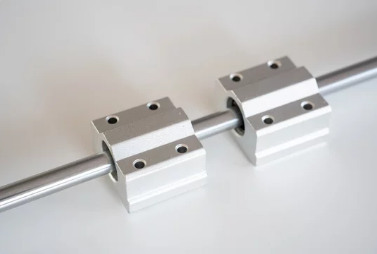
Bearing Housing or Blocks: Protect the bearings and enhance durability while offering stable support.
Seals and Lubrication: Protect bearings from debris and reduce friction, ensuring smooth operation and longevity.
Mounting Hardware: Bolts and fasteners secure the components, ensuring stability and safe operation.
Controllers and Electronics: Manage the motion and provide commands to the drive mechanisms, critical in automated systems.
Power Supply: Provides energy to drive mechanisms and electronics, ensuring continuous operation.
These components work together to create a smooth, efficient, and precise linear motion system tailored to various industrial needs.
Types of Linear Bearings
Linear bearings come in various types, each suited for specific applications based on load requirements, speed, and precision.
Linear Ball Bearings
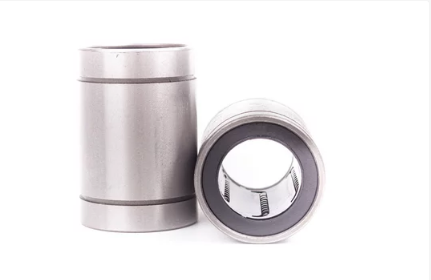
A linear ball bearing is the most common type of linear bearing — it uses small recirculating steel balls to create point contact with a round shaft, giving low friction and smooth motion. It’s the standard choice for light-to-moderate loads and speeds up to about 2 m/s. For heavier loads or higher rigidity, a linear roller bearing is the usual alternative.
Linear Roller Bearings
Roller linear bearings offer greater load capacity, durability, and resistance to shocks and impacts compared to ball bearings. However, they generate more friction because of the larger contact area and are more prone to alignment problems.
Linear Slide Systems
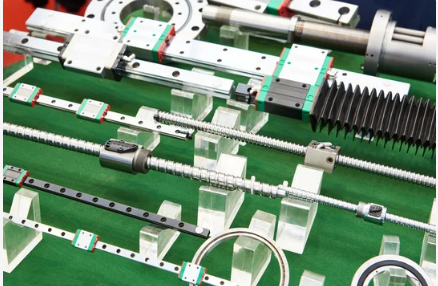
Linear slide systems consist of rails and carriages that work together to provide smooth, guided linear motion.Commonly used in automation and machine tools, these systems ensure precise movement and reliability in various industrial applications.
How Does a Linear Bearing Work?
The core function of a linear bearing is to reduce friction while allowing linear movement along a defined axis.Here’s a quick look at how various types of linear bearings function:
Linear Ball Bearings
Linear ball bearings use small steel balls to reduce friction between the bearing and guide rail.The balls roll along a smooth path, enabling precise, low-friction linear motion.These bearings are commonly used in high-precision applications.
Linear Roller/Needle Bearings
Linear roller bearings and needle bearings use cylindrical or needle-shaped rollers to handle heavier loads.The rollers spread the load over a larger surface area.This ensures smooth linear movement while increasing load capacity and stiffness.
Linear Slide Systems
Linear slide systems incorporate rails and carriages, with ball bearings or rollers to guide the motion.These systems offer high precision and smooth movement, often used in automation and machinery requiring repeatable, accurate linear motion.
Applications of Linear Bearings
Linear bearings are essential in many industries because they are flexible and can support high-precision motion.
CNC Machines
In CNC machines, linear motion bearings are critical for achieving precise, automated cutting and shaping of materials.These machines depend on recirculating ball bearings.
3D Printers
For 3D printing, linear ball bearings enable the smooth movement of print heads and platforms.High precision is essential in these systems, making linear motion bearings a key component for successful print outcomes.
Medical and Laboratory Equipment
In medical devices and laboratory equipment, linear bearings facilitate the movement of instruments with the highest precision, often under sterile conditions.Non-recirculating or plain linear bearings are frequently used due to their load capacity and low-maintenance properties.
Automation and Robotics
In automation and robotics, linear slides with roller bearings or ball bushings are essential. They help create motion systems that are both efficient and durable.
The use of anodized aluminum or stainless steel housings ensures long-lasting performance in industrial environments.
Advantages of Linear Bearings
Linear bearings offer numerous benefits in applications requiring linear motion.
Low friction: Linear bearings minimize contact between moving parts to create smooth movement.This efficiency is vital for high-precision tasks.
High load capacity: Linear ball bearings and roller bearings can carry heavy loads while maintaining their precision.
Adaptability: These bearings come in materials like stainless steel, aluminum, and plastics.They can adapt to different environments easily.
Durability: Bearings made from stainless steel or bronze offer resistance to corrosion, wear, and heavy use. This makes them suitable for industrial applications. Regular maintenance further extends service life — see our noise and failure diagnosis guide for warning signs and fixes.
Ease of replacement: Many linear bearings, such as pillow blocks and linear ball bushings, are simple to retrofit. They are also easy to replace when needed. This helps minimize downtime.
How to Select the Right Linear Bearing
Choosing the right linear bearing depends on several factors:
Load capacity: Determine the maximum load the bearing needs to support.Recirculating ball bearings are ideal for lighter, faster tasks.
Speed and precision: Consider the required speed and precision of movement.Applications like CNC machines require high precision and smooth motion.
Environmental conditions: In dirty environments, contamination can be a problem. Use linear slides with built-in debris-wiping mechanisms to handle this.
Lubrication needs: Pick bearings with the right lubrication method. Self-lubricating plastic liners reduce maintenance.
Once you’ve narrowed down the type, matching it correctly to your shaft or rail is critical — see our shaft and rail pairing guide for tolerances and sizing tables.
For brand-specific guidance, our linear bearing brand comparison breaks down THK, Hiwin, igus, and others by use case.
Conclusion
Linear bearings are essential for systems needing precise linear motion. With various materials and designs, linear bearings handle heavy loads and high-speed tasks. Knowing the types and benefits helps you choose the right linear bearing for optimal performance, durability, and efficiency.
Frequently Asked Questions
How much weight can a linear bearing hold?
It depends heavily on size and type.A small LM8UU-style ball bearing on an 8 mm shaft holds roughly 150–250 N, while a 20 mm shaft bearing (LM20UU) handles 800–1,400 N.Profiled rail systems scale much higher — a 25mm-class carriage from a major brand is typically rated 8,000–10,000+ N, and roller-type carriages can exceed that further.Always check the manufacturer’s dynamic load rating (C) for the exact model rather than relying on a rule of thumb.
What is the lifespan of a linear bearing?
Linear bearing life is measured in kilometers of travel, not calendar time, using the L10 formula: L10 = (C/P)³ × 50 km, where C is the dynamic load rating and P is the actual applied load. A lightly loaded axis can theoretically last thousands of years of travel; a heavily loaded, high-cycle axis might only reach 1,000–2,000 operating hours. In practice, lubrication interval and seal condition — not fatigue life — are usually the limiting factor. See our Ball vs. Roller comparison and Rotary vs. Linear guide for worked examples.