
A Simple Guide to Ball Bearing Materials
Table of Contents
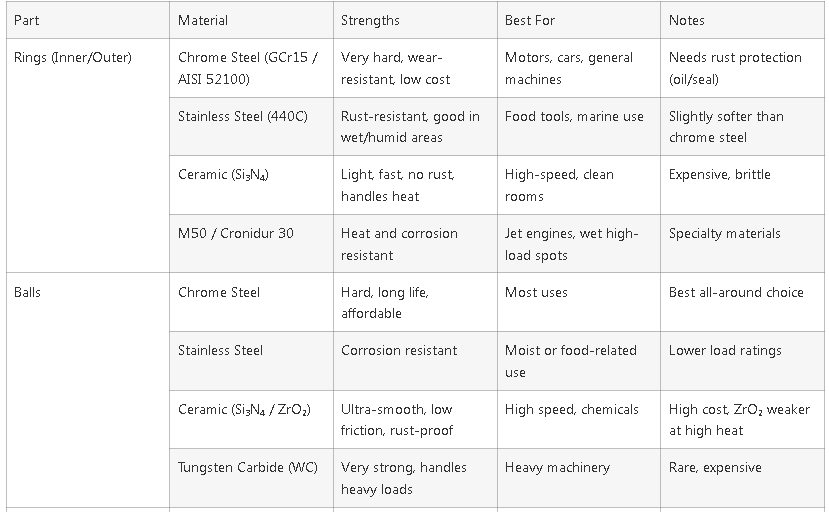
A Quick Comparison Table – Ball Bearing Material Types
Introduction
Imagine a race car speeding on a hot track, a boat motor splashing through salty waves, or a food factory where machines need to stay super clean.
Each of these needs ball bearings, but not the same kind! Ceramic ball bearings handle the heat and speed of racing, stainless steel ball bearings fight rust in wet boat engines, and plastic ball bearings keep things light and clean in food plants.
The material in a ball bearing makes all the difference for how it works. In this article, you’ll learn about the main types of ball bearing materials and where they shine.
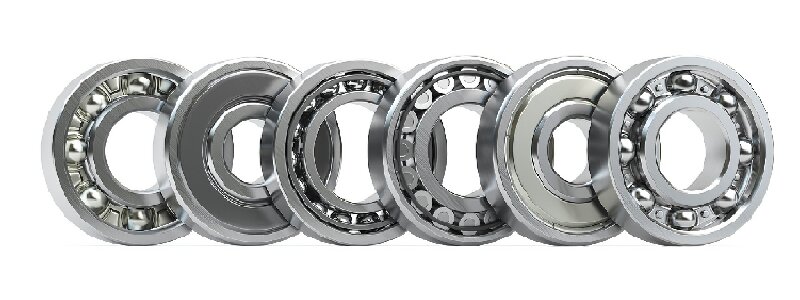
Inner and Outer Ring Common Materials
The rings in a bearing hold everything together. They take on the pressure from spinning and keep the balls in place. Because of this, the material needs to be super strong and stable.
What They Need To Do:
- Handle both side and up-down pressure
- Stay strong under spinning and heat
- Keep their shape over time
Ball Materials: The Rolling Part
The balls take on all the movement. They need to be smooth, strong, and long-lasting.
What They Need To Do:
- Keep friction low
- Stay tough under pressure
- Resist wear over time
What Are Ball Bearing Balls Made Of?
The balls are made from materials similar to the rings, chosen for their specific job:
Steel Balls/ Ceramic Balls /Plastic Balls
How to Choose the Right Ball Bearing Material
So, with all these different materials for the rings, balls, cages, and seals, how do you figure out which ball bearing you need for your project?
It really comes down to thinking about the specific conditions where the bearing will work. Ask yourself:
- Will it be exposed to water, chemicals, or dirt? (Think stainless steel, plastic, special seals)
- How fast will it spin, and how much weight will it carry? (Think steel, ceramic, Tungsten Carbide for balls, specific cage materials)
- What will the temperature be? (Think special high-temp steels, ceramics, PEEK plastic)
- Does it need to not conduct electricity or be non-magnetic? (Think ceramic, plastic)
- Does it need to run quietly or without much lubrication? (Think plastic cages, certain materials)
Often, the best bearing is a combination of materials. For example, a stainless steel bearing with rubber seals for a wet environment. Or a hybrid bearing with ceramic balls for speed in a steel ring.
Looking at a ball bearing types chart can be helpful to see the different types and their typical materials and uses side-by-side.
If your needs are very specific, don’t worry! You can often get custom ball bearings made with just the right mix of materials for your unique situation.
Get the Right Bearing from XTO Bearing
Picking the right material for your ball bearing bearings is a big step. It helps make sure your machine or product works smoothly, lasts a long time, and performs correctly in its specific environment.
The materials used for the rings, balls, cage, and seals all affect the bearing’s strength, speed ability, how well it handles heat or water, and even its cost.
It might seem like a lot to think about, but you don’t have to figure it out alone! We at XTO Bearings make all sorts of high-quality ball bearings using the materials we’ve talked about, including custom ball bearings.
We understand how important it is to have the perfect fit for your needs.
Ready to find the best ball bearing for your project? Have questions about which material is right? Check out our website to see our range and learn more! Or, just contact us directly – we’re experts in bearing materials and applications, and we’re here to help you choose the perfect bearing and even create custom solutions for you!
Questions About Ball Bearing Materials
Why are ceramic ball bearings often used for very high speeds?
Ceramic materials like Silicon Nitride are much lighter and harder than steel. This helps them spin faster with less force pushing outwards and less rubbing.
What’s the main difference between 52100 chrome steel and 440C stainless steel for bearings?
The biggest difference is fighting rust. 440C stainless steel has a lot more chrome than 52100 steel. This makes 440C much better at resisting rust and corrosion, especially in wet places.
When would you need a plastic ball bearing?
Plastic bearings are useful when you need something very light, that won’t rust at all, doesn’t carry electricity, resists chemicals, or needs little grease. They are for lighter jobs than metal bearings.
Are the balls always made of the same material as the rings in a bearing?
Not always! Sometimes bearings mix materials, like ceramic balls in steel rings. This is done to combine benefits, like getting high speed from the ceramic balls with the strength of steel rings.
Why are there different materials for the cage?
The cage material depends on how fast the bearing spins, the temperature, and the place it’s used. Metal cages are strong. Plastic cages are lighter and quieter but have temperature limits. Ceramic cages are for extreme heat and speed.